Could Oil Really Hit $200? Here's What That Would Actually Do to the Middle East and Africa
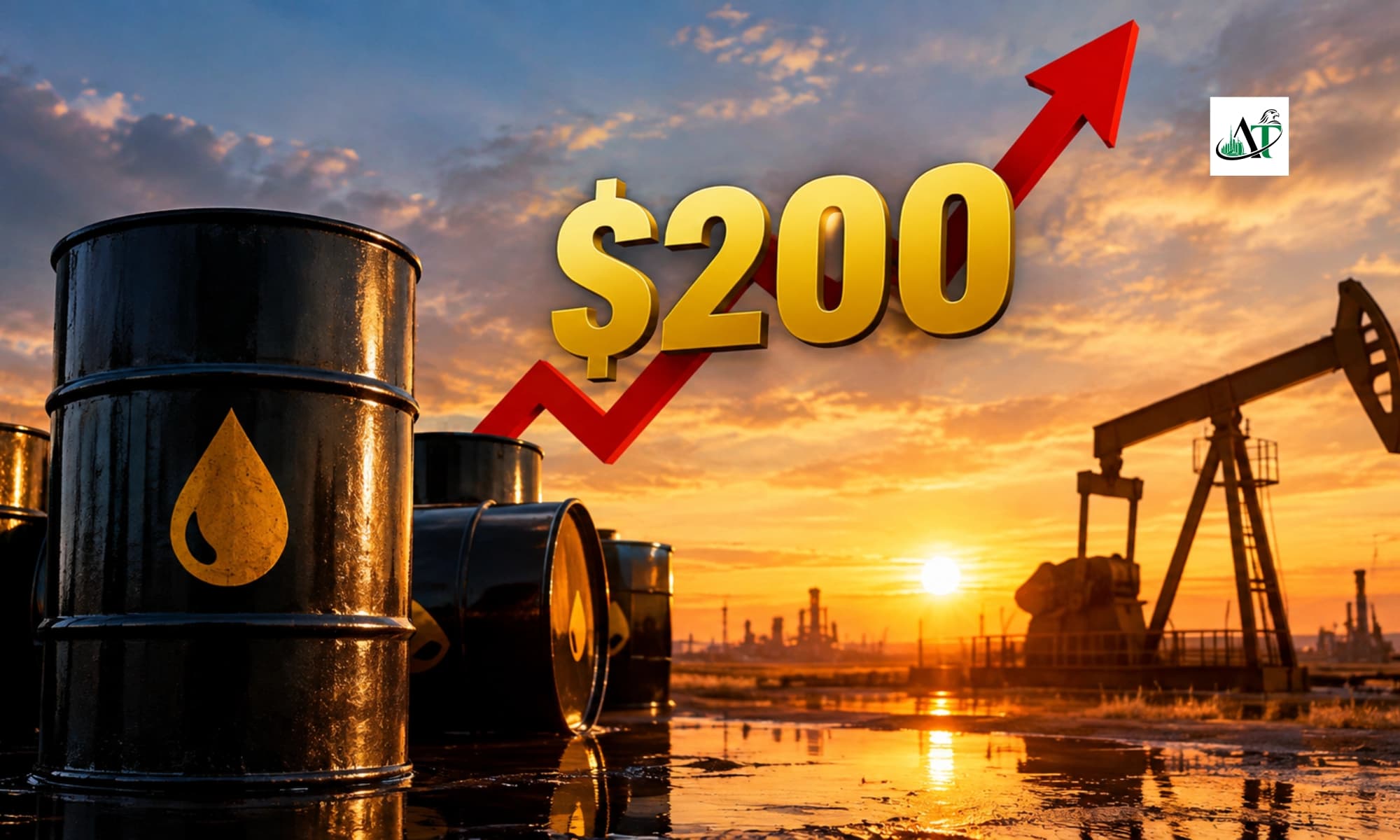
“A new Foreign Affairs analysis warns oil could climb to $150–$200 a barrel if Middle East energy infrastructure takes more damage. Egypt's president has already flagged what that price would mean for the world's poorest importers.”
An analysis published in Foreign Affairs this week, written by Council on Foreign Relations president emeritus Richard Haass and energy specialist Carolyn Kissane, raised a number worth sitting with carefully rather than reacting to: oil could climb to $150–$200 a barrel if further attacks damage critical Middle East energy infrastructure, potentially tipping the global economy into recession. What makes their argument worth taking seriously isn't the number itself — analysts have floated $200 oil before, more than once, since February — it's the specific mechanism they describe. For six months, they argue, the war was disruptive but manageable precisely because several extraordinary, temporary adjustments absorbed the shock: Gulf producers rerouted crude around the closed Strait of Hormuz through alternative pipelines, China drew down roughly 1.4 billion barrels of its own strategic stockpile and throttled fuel exports to act as what energy analyst Javier Blas has called a "swing importer," and strategic reserves elsewhere in the world were tapped to smooth over the worst of the price spikes. Those were the quickest, least economically damaging tools available, and governments have already used most of them. What's left, Haass and Kissane argue, is thinner and harder to mobilize quickly.
The reason this matters right now, rather than as a six-months-old worry, is that the war has expanded into exactly the infrastructure that made those buffers work in the first place. As of mid-September, the Bab el-Mandeb Strait — the main Red Sea alternative to shipping through Hormuz — sits under Houthi control. Saudi Arabia's own East-West Pipeline, the 1,200-kilometer route that had been carrying four to five million barrels a day toward the Red Sea port of Yanbu, was knocked offline for ten days this month by drone strikes before repair crews restored it. The UAE has a comparable pipeline running crude inland to Fujairah, bypassing Hormuz entirely — but as the Foreign Affairs piece notes, once a route like that has been demonstrated to work, it also becomes a demonstrated target, and there's no reason to assume it stays untouched simply because it hasn't been hit yet. Qatar is the starkest case of all: unlike Saudi Arabia and the UAE, it has no alternative export route that bypasses Hormuz for its liquefied natural gas, which is why an earlier round of strikes on its Ras Laffan facility this year — reportedly damaging roughly 17% of the country's LNG production capacity — landed with nothing standing between the damage and the global market.
None of the specific dollar figures being floated are outliers dreamed up by one analyst. Early in the war, BlackRock's Larry Fink warned that oil at $150 would trigger what he called a steep and stark global recession. The Economist separately calculated that two sustained months at $140 would push significant parts of the global economy into a slump. Bank of America's base case has crude averaging $115 for the year in an escalation scenario, with a worst case closer to $200 if critical facilities take sustained damage and export volumes recover slowly. Macquarie's own oil strategist put rough odds on an extended-war scenario earlier this year, odds that have moved up and down with the news cycle but never disappeared entirely. Set against that is a genuinely more reassuring data point: the IMF's own assessment is that the world economy has weathered this war's initial shock better than many feared, with crude settling for stretches between $90 and $100 rather than spiraling immediately. Brent is trading around $105–107 as of this week — elevated, uncomfortable, but nowhere near the scenario ceiling. Both things are true simultaneously, which is exactly the tension Haass and Kissane are pointing at: the system has coped so far, and that coping is precisely what's now running low on room.
This is where the number stops being an abstract market scenario and becomes a story about the Middle East and Africa specifically, rather than a Wall Street thought experiment. Egyptian President Abdel Fattah el-Sisi made the connection explicit earlier this year, warning that oil above $200 would damage global food and energy markets together — a compound shock landing hardest on developing economies that import both at once. That's closer to arithmetic than rhetoric. A large share of this region imports the majority of its refined fuel even in countries that export plenty of crude, and food and fertilizer production run on the same energy inputs that get more expensive first, before almost anything else does. Countries already stretched thin from this year's price shock have very little fiscal room left to absorb a second, larger one. Kenya already cut its fuel VAT once this year specifically to head off street protests in Nairobi. Senegal is already close to exhausting its full annual fuel subsidy budget with a full quarter still to go. Ethiopia is already running emergency diesel and petrol subsidies its government didn't originally budget for. None of these governments has a deep second reserve of fiscal flexibility sitting untouched; a second leg up in prices doesn't find fresh room in any of these places, it finds whatever is left over after the first one.
There's a layer of this compounding that doesn't get discussed enough alongside the headline oil number: the currency side. The Fed's rate hike this month, and the matching hikes that followed across the dollar-pegged Gulf, have kept the dollar broadly firm at the same time oil is elevated. For an oil-importing country paying in dollars while its own currency isn't pegged to one — much of Sub-Saharan Africa, most of the Levant — a firmer dollar makes the same barrel of oil cost more in local-currency terms even before the price of the barrel itself moves. That's a second, quieter tax stacking on top of the first one, and it's exactly the kind of interaction that doesn't show up in a single "oil at $X" headline but shows up very clearly on a finance ministry's balance sheet.
There's also a genuine offsetting force worth naming honestly, and a genuine complication inside it. Gulf oil exporters and Nigeria's producers see real fiscal upside at $150–200 oil, the same way they've seen upside at $106 this month. But even that upside isn't uniform among producers — Qatar, a major gas exporter, has already had a chunk of its own export capacity physically damaged by the war it might otherwise be profiting from, which is a reminder that "producer" and "winner" aren't automatically the same word in this conflict. And none of the export-side upside says anything about what a second price shock does to a Kenyan household's grocery bill or a Jordanian family's winter heating cost when almost everything they buy runs on the same energy input. The scenario in this week's analysis is exactly that: a scenario, not a forecast, and the same reporting that raised it also notes physical oil supply has genuinely been recovering in recent weeks. But seven months into a war defined by de-escalation that keeps almost arriving and then doesn't, this region has learned, correctly, not to assume the ceiling has already been reached — and not to assume the next shock, if it comes, will be absorbed as smoothly as the last one was.