Saudi Arabia Declared 2026 'The Year of AI.' Here's the Receipt That Proves They Meant It.
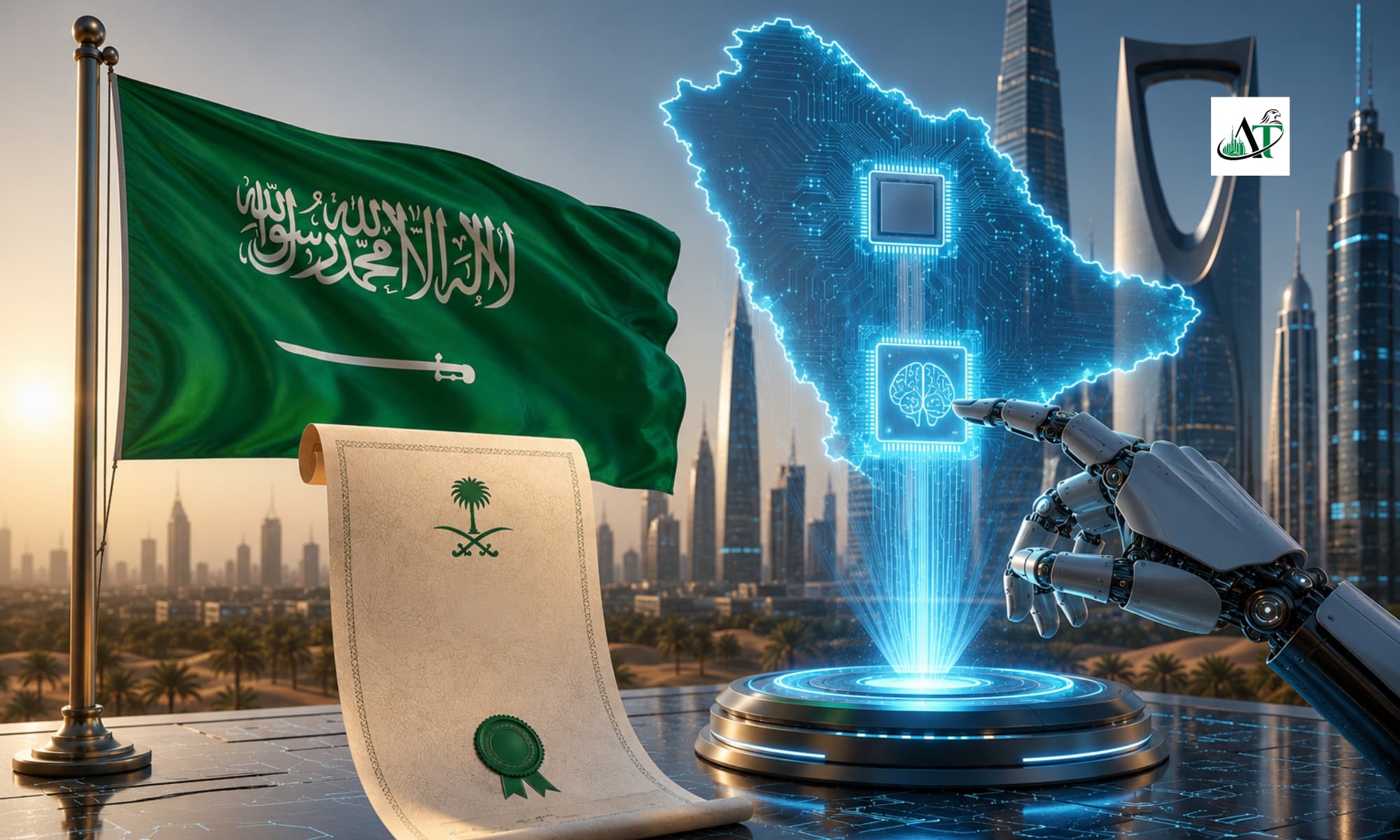
“Naming a year after a technology is easy. Saudi Arabia's actual 2026 spending and infrastructure commitments show what it looks like when a government treats that declaration as an operating plan, not a slogan.”
Naming a year after a technology is easy. Saudi Arabia's actual 2026 spending and infrastructure commitments show what it looks like when a government treats that declaration as an operating plan, not a slogan.
Key Takeaways
• Saudi Arabia has officially designated 2026 as the 'Year of AI' — a declaration that's become common enough globally that it risks being read as marketing rather than policy. • The Kingdom's actual commitments this year say otherwise: a $10 billion PIF-Google Cloud partnership, up to 5,000 NVIDIA Blackwell GPUs deployed with the Saudi Data and AI Authority, and HUMAIN's own 500-megawatt AI factory build-out. • More than a third of organisations across Saudi Arabia and the UAE have already deployed agentic AI operationally — placing the Kingdom's declaration well ahead of where most governments making similar statements actually stand on adoption.
Governments naming a year after a technology has become common enough to be almost meaningless as a signal on its own — a low-cost way to generate a news cycle without necessarily changing a budget line. Saudi Arabia's declaration of 2026 as the 'Year of AI' deserves a different read, because the spending and infrastructure commitments behind it are specific, large, and already under construction rather than promised for some future year.
Start with the capital. The Public Investment Fund has advanced a $10 billion partnership with Google Cloud to build a global AI hub inside the Kingdom. Separately, NVIDIA is working directly with the Saudi Data and AI Authority to deploy up to 5,000 Blackwell GPUs for a sovereign AI factory. And HUMAIN — the PIF-backed AI infrastructure company — is building toward roughly 500 megawatts of AI factory capacity, powered by several hundred thousand GPUs deployed over five years, with Adobe already signed on as its first global data centre tenant. None of these are pilot-scale commitments. They're the kind of capital allocation that only makes sense if a government genuinely intends to compete for a central role in global AI infrastructure, not simply signal enthusiasm for it.
The adoption numbers back up the infrastructure story. More than a third of organisations across Saudi Arabia and the UAE have already deployed agentic AI — systems that make decisions and complete tasks independently — at a genuinely operational level. That places the Kingdom's 'Year of AI' declaration in a different category than most governments making similar statements this year: Saudi Arabia isn't declaring an ambition it's starting to build toward. It's naming a year during which adoption metrics most peer economies are still working to reach were already substantially in place.
The test for the rest of 2026 isn't whether the declaration was sincere — the infrastructure spending already answers that. It's whether HUMAIN, the Google Cloud partnership, and the broader compute build-out can translate into a genuinely competitive AI services ecosystem, rather than remaining primarily infrastructure that other countries' AI companies rent space in. That's the harder, still-open question sitting behind an easy-to-announce, considerably harder-to-execute headline.