What Every CEO Needs to Understand Before Doing Business in Saudi Arabia in 2026
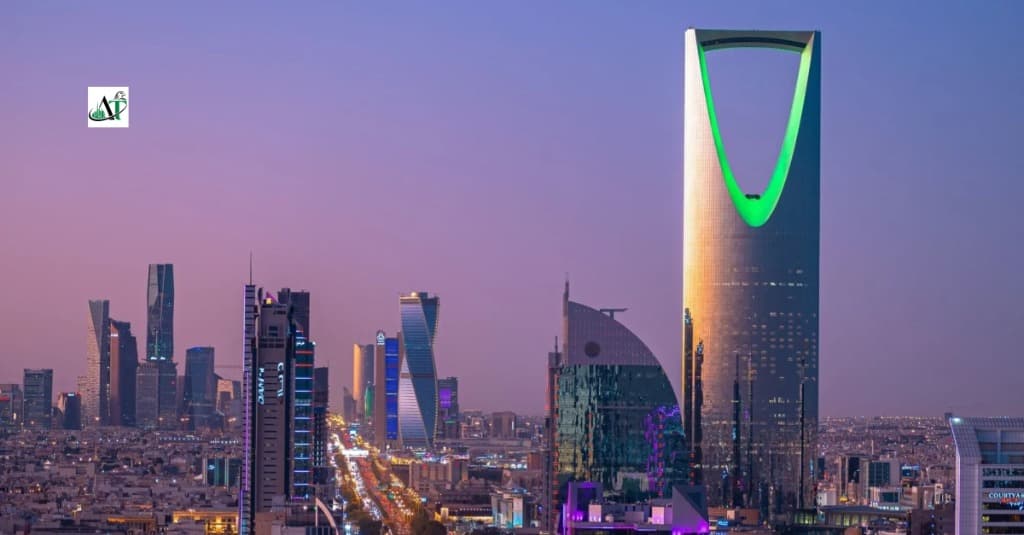
“Vision 2030 has entered its third and final phase. Saudi Arabia is no longer interested in announcements — it wants results, local capability, and partners who understand what it is actually building.”
I have spoken to dozens of executives over the past year who are preparing to enter Saudi Arabia or scale their existing operations in the Kingdom. Most of them have done the right preparatory work: they have read the Vision 2030 documents, attended the Future Investment Initiative, had meetings with the Saudi Investment Authority, and returned to their boards with a presentation that described the opportunity in the correct terms.
Very few of them are fully prepared for what the market actually asks of you once you are in it.
These are the things I wish someone had told them before they got on the plane.
The Relationship Is the Strategy
Every seasoned operator in Saudi Arabia says some version of this, and most Western executives hear it and decide it is cultural colour rather than commercial instruction. It is commercial instruction.
Saudi Arabia's business culture is built on trust developed through sustained personal relationships, not on contractual frameworks developed through legal negotiation. This does not mean that contracts don't matter — they do, and the Kingdom has developed a sophisticated commercial court system and an investment law that provides genuine legal equality between foreign and local investors. It means that in Saudi Arabia, a contract you cannot back with relationship will not perform the way it would in a more transactional business environment.
The practical implication: the CEO must be visible in the market. Not a regional VP. Not a designated country manager. The person whose name is on the business card that matters must show up, must attend the dinners, must be present at the events that signal commitment. The Kingdom is large enough, and the opportunities are significant enough, that there is a queue of people competing for every major contract and partnership. The differentiator is almost never price or product specification. It is trust, built through consistency of presence over time.
If you are sending a regional VP to Saudi Arabia while competitors are sending their CEOs, you have already answered the question of how seriously you take the market.
Localisation Is Not Optional, And It Is Not About Language
The Saudi government's Nitaqat system — the mandatory Saudisation framework requiring businesses to employ minimum percentages of Saudi nationals — has been in place for years. What has changed in 2026 is the sophistication of its enforcement, the breadth of its application across sectors, and the genuine expectations of regulators that Saudi employees are in substantive roles, not compliance head-count.
This is a more demanding environment than many foreign companies are accustomed to. But it is also, when engaged with honestly, an opportunity. Saudi Arabia has a young, educated, ambitious workforce that is hungry for private sector careers that match their qualifications and aspirations. The companies that build genuine Saudi talent pipelines — that invest in training, development, leadership tracks, and the cultural work required to make a multinational genuinely welcoming to Saudi employees — will outperform companies that treat Saudisation as a compliance exercise.
The Saudisation of front-line customer service in banking and retail has, in a number of documented cases, actually improved customer experience scores for Saudi customers who are being served by people who share their cultural context and language. The business case for genuine localisation, as opposed to performative compliance, is stronger than many external observers assume.
The Procurement Cycle Is Different
Government-linked procurement in Saudi Arabia operates on timelines and approval processes that are genuinely different from what most international companies are accustomed to. Decisions that would take one to two months in a commercial Western context can take significantly longer when the ultimate decision-maker is a government entity or a company with sovereign ownership.
This is not dysfunction. It is the mechanics of a system in which consequential decisions require multiple layers of alignment and approval, because the entities making them bear genuine accountability for very large public resources. Understanding this dynamic — and building cash flow models and business plans that accommodate it — is a prerequisite for operating in the Saudi B2G market without constant frustration.
The flip side: once a Saudi government entity has committed to a supplier, the relationship tends to be durable in a way that commercial relationships in more transactional markets often are not. The procurement cycle is long. The relationship cycle, once established, is longer.
The Vision 2030 Alignment Test
Every significant business opportunity in Saudi Arabia in 2026 exists in relation to Vision 2030. The Kingdom is not simply a large economy where businesses can find customers. It is a strategically directed economy in which government capital, regulatory priority, and institutional attention are channed along lines determined by the Vision's objectives.
This creates a simple test that every foreign company should apply to their Saudi strategy: does what we are selling accelerate the Kingdom's Vision 2030 objectives? Not superficially — not with a paragraph in the proposal deck about digital transformation — but genuinely. Does this product or service help Saudi Arabia diversify its economy, develop its human capital, grow its non-oil revenue, expand its tourism sector, or build its technology infrastructure?
If the answer is yes, and you can demonstrate that clearly, you will find that doors open more readily, procurement moves faster, and partnership conversations begin at a more senior level than you might expect. The Kingdom is not passively waiting for foreign companies to bring value. It is actively looking for partners who understand what it is trying to build and can contribute to that construction honestly.
If the answer is no — if what you are selling is purely extractive, or relevant only to the oil economy the Kingdom is actively trying to reduce its dependence on — you should expect a more difficult experience than the market statistics might suggest.
The Third Phase Is Different
Vision 2030 has entered its third and final phase. The first phase built the foundations — regulatory reform, institution-building, social liberalisation. The second phase accelerated investment and activated the mega-projects. The third phase, running from 2026 to 2030, is about delivery and sustainability. The Crown Prince has described it as the phase when "transformation tools reach their highest levels of readiness."
What this means for business: the Kingdom is now less interested in announcements than in execution. The MOU era — the era of Memoranda of Understanding that generated press releases without generating businesses — is drawing to a close. What Saudi Arabia wants from its international partners now is not visibility. It is results. Companies that can deliver measurable outcomes, build local capability, and produce genuine employment and economic value will be welcomed with a level of institutional support that is extraordinary by global standards. Companies that arrive with press release ambition and implementation limitations will find the environment less patient than it was five years ago.
Saudi Arabia has committed over USD 1.25 trillion in cumulative investment since 2016. It is not running out of capital or ambition. It is running out of tolerance for theatre.