The Sovereign Tech Pivot: Why Middle Eastern Governments Are Building Technology Rather Than Just Buying It
Geopatriation — relocating digital workloads onto sovereign-controlled clouds and local hardware — is the most consequential structural shift in the Middle East technology landscape in 2026.
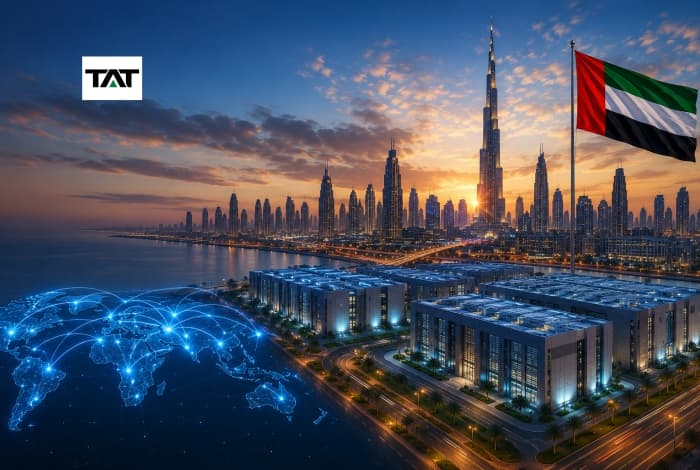
There is a term that has moved from obscure policy papers into the mainstream of Gulf economic strategy in 2026: geopatriation. It refers to the relocation of digital workloads and data onto sovereign-controlled clouds and local hardware — and it represents one of the most consequential structural shifts in the Middle East technology landscape.
Understanding why it matters requires understanding what it replaces. For the first two decades of Gulf digital transformation, the model was essentially colonial in its technology dimension: foreign hyperscalers provided the cloud, foreign consultants designed the systems, foreign hardware manufacturers supplied the chips. The Gulf paid for all of it generously, built capable local teams, and accepted a structural dependency on technology infrastructure it did not control. That model is ending. Not gradually — rapidly.
What Sovereign Technology Actually Means in 2026
The UAE's Mohammed Bin Rashid Space Centre has advanced sovereign satellite programmes, reducing dependence on foreign satellite communications for critical government applications. In semiconductors, Abu Dhabi-based startup Mastiska has raised USD 10 million in seed funding — backed by sovereign wealth funds — to develop domestic chip design capacity. Saudi Arabia has ranked first globally in cybersecurity through the systematic building of domestic capability in threat detection, incident response, and security operations centre infrastructure.
The Kingdom's national AI strategy is producing Arabic large language models — including Jais, developed jointly by Inception and Mohamed bin Zayed University of Artificial Intelligence in Abu Dhabi — that ensure the next generation of AI-powered government services runs on locally developed, locally controlled, Arabic-native models. Microsoft's Saudi Azure region is entering general availability in Q4 2026, a physical cloud infrastructure inside the Kingdom allowing regulated industries and government entities to use cloud services while keeping data within Saudi borders.
The Business Implications Nobody Is Pricing Correctly
For global technology companies, geopatriation is both a constraint and an opportunity. The constraint: compliance is no longer contractual but architectural. Having a legal entity in the UAE or Saudi Arabia no longer satisfies regulators. They want in-country infrastructure, by design, from the outset. The opportunity: the government-mandated requirement for local infrastructure creates enormous, low-competition procurement opportunities for companies willing to make the capital commitment.
The Middle East digital transformation market is forecast to grow from USD 59.47 billion in 2025 to USD 146.09 billion by 2031, at a CAGR of 15.32 percent. Saudi Arabia alone has earmarked more than SAR 113 billion (USD 30.1 billion) for ICT over a three-year horizon. The technology companies that will define the Gulf's digital economy in 2030 are being built today, inside the region, by founders who understand both the technical requirements and the regulatory landscape intimately.