Dubai's Property Market Has Broken Every Record It Set. Now What?
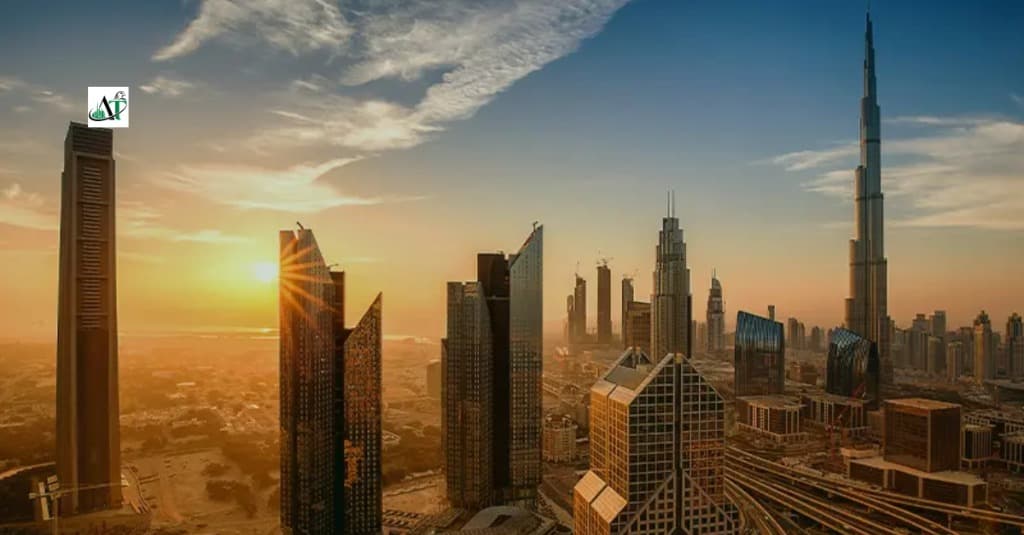
“With AED 176.7 billion in Q1 2026 transactions, villa prices up 206% since the pandemic, and 67% cash purchases, Dubai's real estate story is structural — not speculative.”
Sometime in the first quarter of 2026, a single apartment in Dubai changed hands for AED 422 million. The building was Aman Residences Tower 2 — a project so exclusive that even writing the name requires a certain composure. That same quarter, a villa at Jumeirah First sold for AED 350 million. Neither buyer was a sovereign wealth fund. Neither property was a commercial investment. These were homes.
Numbers like this demand scrutiny. Markets that produce them are either in the late stages of a dangerous speculative bubble, or they are doing something genuinely structural and different. In Dubai's case, the evidence is accumulating heavily in the direction of the second explanation — though not without qualifications.
The Quarter That Rewrote the Records
The first quarter of 2026 was, by any objective standard, extraordinary. Total property transactions in Dubai reached AED 176.7 billion across nearly 48,000 deals, according to data from fäm Properties. Transaction values rose 23.4 percent year on year. Volumes increased 5.5 percent. The gap between value growth and volume growth tells the story more precisely than either number alone: prices are rising faster than deal counts. The market isn't just busier. It's buying more expensively.
Dubai Land Department data for Q1 showed a broader picture: 718,160 real estate transactions in total — including registrations and other activity — worth AED 252 billion, up 31 percent year on year. The mortgage market strengthened in parallel: 11,829 mortgage transactions in Q1, up 7.5 percent year on year, with total mortgage value reaching AED 59.8 billion — a 46 percent increase. Women investors alone put AED 154 billion into Dubai property in Q1 through 76,700 deals, representing 31 percent growth in value and 24 percent growth in deal numbers.
These are not the statistics of a bubble. Bubbles are characterised by thin participation — a concentrated group of speculators driving prices through debt-fuelled momentum. What Dubai's Q1 2026 data shows is breadth: diverse buyer profiles, cash-rich transactions (67 percent of resales are cash), and genuine end-user demand underpinning the market alongside investor activity.
The Structural Pillars Nobody Wants to Think About
Dubai's property market is easy to misread if you focus only on the headlines. The AED 422 million apartment gets the attention. But the structural story is about population, not palaces.
Dubai surpassed four million residents in 2025, growing at approximately 5 percent annually. Another 175,000 to 225,000 residents are expected to arrive in 2026 alone. The city added 208,000 residents in 2024 — net new arrivals who need somewhere to live, not speculative buyers inflating values from overseas. This population growth is driven by real migration: technology professionals from Europe, finance executives from Asia, entrepreneurs from across the global south who have chosen Dubai as their home base, drawn by a combination of tax efficiency, infrastructure quality, personal safety, and a quality of life that Western capitals have found difficult to compete with.
The 10-year Golden Visa has transformed the psychological relationship between buyers and Dubai's property market. Homeownership in Dubai used to mean something provisional — an investment that could be unwound in a cycle. A Golden Visa means a decade of residency security. Buyers with a ten-year guarantee think differently. They renovate. They commit. They become genuine stakeholders in the city's long-term quality of life.
Freehold ownership with no annual property tax, no capital gains tax, and no tax on rental income continues to produce yields of 5 to 8 percent in prime areas — figures that London, Paris, Singapore, and New York simply cannot match for comparable asset quality.
What Analysts Are Actually Worried About
Nobody credible is calling a crash. But serious analysts are watching several tensions in the market with steady attention.
The gap between value growth and volume growth carries a caution inside it. A market where prices are rising significantly faster than transaction counts can indicate that the most affordable tier of buyers is beginning to be priced out. This matters for long-term market health: a city needs a functioning mid-market, not just a luxury segment sitting above a gap.
Supply is complex and often misread. Over 300 residential projects were unveiled in Dubai in 2025 alone, building across mid-market apartments, luxury villas, beachfront dwellings, and smart-home communities. On the surface, this looks like a supply wall approaching. But actual 2026 deliveries are expected to fall 30 to 40 percent below projections due to construction delays and phased handovers. The pipeline looks heavy on paper. The real world delivers more slowly.
And in the ultra-luxury segment — properties above AED 20 million — supply remains genuinely constrained. Developing at that tier requires exceptional land, a developer with a balance sheet to match the timeline, and finishes that justify the price point. There are perhaps five developers in the world who can do it consistently. In Dubai, fewer still. Palm Jumeirah recorded 273 ultra-luxury transactions — demonstrating real market depth, but also supply that cannot be rapidly scaled.
Villa Prices: The Pandemic's Most Lasting Legacy
Of all the data points in Dubai's 2026 real estate story, none is more remarkable in isolation than this: average freehold villa values have risen 206 percent since the pandemic. More than doubled. In established, low-density communities — Jumeirah, Emirates Hills, Arabian Ranches, Mohammed Bin Rashid City — limited supply, mature infrastructure, and the simple fact that you cannot manufacture more land in a finite geography are combining to create appreciation curves that no financial model predicted.
The pandemic, which appeared in 2020 to be a crisis moment for Dubai's property market, turned out to be its inflection point. The flight from high-density urban living in London and New York, the arrival of remote workers with Western salaries and a desire for space, the opening of Dubai's tourism sector while others remained closed — these forces converged in a city that had excess luxury supply, excellent infrastructure, and a government willing to reform visa rules in real time to capture inbound talent.
The Road Ahead
Market specialists expect 2026 to remain elevated, supported by infrastructure expansion, population growth, and continued investor inflows. But the consensus is shifting from "growth" as the story to "sustainability" as the benchmark. The fäm Properties analysis put it clearly: 2025 was momentum-driven; 2026 rewards logic-based purchasing — backing the fundamentals of the project, the reputation of the developer, and the strategic value of the location, not the hype.
Areas served by the future Blue Line Metro — Dubai Creek Harbour, Festival City, parts of Dubai Silicon Oasis — are being watched as the next zone of price acceleration, as infrastructure investment historically precedes property demand by two to four years in Dubai's market.
For investors sitting outside the market asking whether it is too late: the answer depends entirely on what you are buying and why. The AED 422 million apartment is a trophy asset for a category of buyer for whom price is not a primary constraint. But a well-located, mid-market apartment in a supply-constrained community with strong rental fundamentals and metro access is a different asset class entirely. Dubai has both. Confusing them is the mistake most foreign commentators make.