The Kingdom's New Chapter: What Saudi Arabia's Vision 2030 Has Actually Built — And What It Hasn't
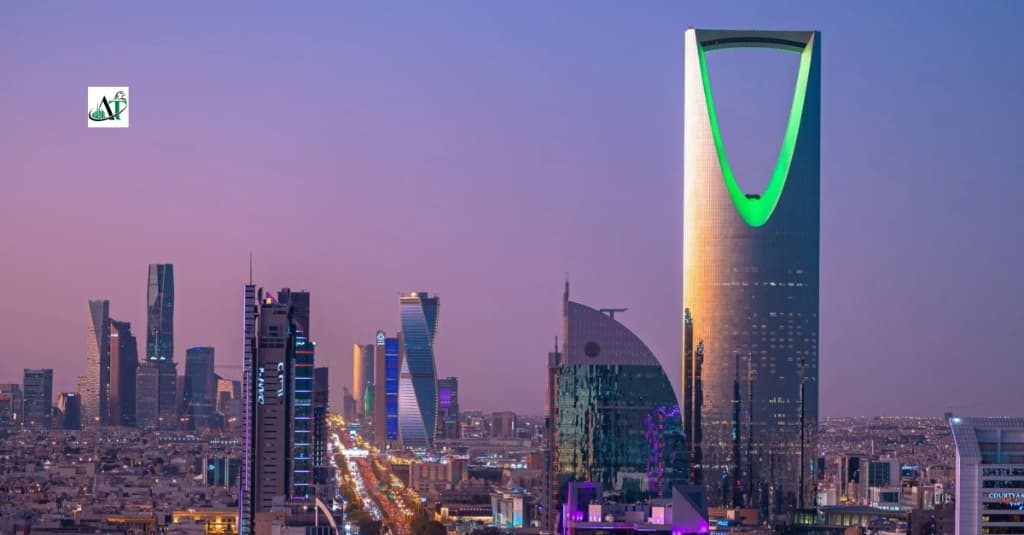
“Saudi Arabia's GDP crossed SR 4.9 trillion by the end of 2025, with non-oil activities now contributing 55 percent of that total.”
There is a number that Saudi Arabia's planners almost never expected to say out loud so soon: 100 million tourists. When Crown Prince Mohammed bin Salman unveiled Vision 2030 in April 2016 — a 35-year-old prince standing before the world with an audacious blueprint to dismantle the world's most oil-dependent economy — that figure was a stretch goal stitched into the document as a sign of ambition, not a near-term forecast. The Kingdom attracted fewer than 20 million international visitors that year. Most were religious pilgrims. The idea of a leisure-seeking tourist flying to Riyadh for a weekend felt, to many, improbable at best.
And yet, by the end of 2025, Saudi Arabia had already surpassed that 100 million target — five years ahead of schedule. The Vision's own architects responded not with satisfaction but with acceleration: the target was immediately revised upward to 150 million visitors by 2030.
This is what Vision 2030 looks like from the inside in its third and final phase: a project that has surprised itself.
Let's be honest about what has been built. Saudi Arabia's GDP crossed SR 4.9 trillion (approximately USD 1.3 trillion) by the end of 2025, with non-oil activities now contributing 55 percent of that total. When the Vision launched, oil dominated the economy in a way that made diversification feel almost structurally impossible. A decade later, non-oil GDP has reached SR 893 billion — close to its interim target of SR 904 billion — and for the first time in the Kingdom's modern history, the private sector contributes more than half of economic output, at 51 percent.
Foreign Direct Investment stock has grown 119 percent since 2017, reaching SR 293.3 billion in 2025. The number of small and medium enterprises has surpassed 1.7 million, collectively employing 8.8 million people. Saudi Arabia has jumped more than 20 places in the IMD Global Competitiveness Index, now ranking 17th globally. It sits first worldwide in cybersecurity, third in the global AI index.
Perhaps the most human of all the metrics: Saudi female workforce participation has nearly tripled since 2017, rising to approximately 36 percent in 2026. A generation of Saudi women who grew up watching their mothers sit out the formal economy are now entering it — as engineers, finance professionals, entrepreneurs, and government officials.
The Vision has activated 1,290 initiatives in total. Of those, 935 have been completed and 225 are on track. Some 93 percent of all performance indicators have met or are approaching their targets.
A credible account of Vision 2030 requires holding both truths simultaneously.
The giga-projects — NEOM, Diriyah Gate, Qiddiya, the Red Sea Project — arrived with the weight of entire economies attached to their names. NEOM alone was announced at USD 500 billion. THE LINE, its most iconic component, was designed as a mirrored 170-kilometre linear city housing nine million people, powered entirely by renewable energy. The concept bent every architectural rule ever written.
By 2026, multiple ambitious components of these projects have been substantially scaled back or delayed. Construction timelines have stretched. Labour conditions on some project sites have drawn international scrutiny. The Line, which once promised to be operational by the decade's end, is now expected to house far fewer residents than originally announced in its initial phases.
Renewable energy tells a similar story of ambition meeting reality. Saudi Arabia is on track to reach approximately 45 to 55 gigawatts of operational renewable capacity by 2030 — a genuine transformation from essentially zero a decade ago, but well below the 130 GW aspiration. At current trajectory, only around 10 GW is connected, with 20 GW expected by end of 2026 as additional projects enter commissioning.
Non-oil exports — a critical measure of whether the Kingdom is truly becoming a manufacturing and services exporter — accounted for just over 22 percent of non-oil output in 2025, below target and below the 50 percent goal for 2030.
And the private sector's contribution, while historically significant at 51 percent, remains well below the 65 percent the Vision originally called for. It has now been set as the revised target.
Academic analyses of Vision 2030 have begun reaching for an unconventional comparison: post-independence Singapore in the 1960s. One serious assessment by Baker Institute researchers described Saudi Arabia as having executed "the largest peacetime regulatory and institutional restructuring since Singapore's post-independence transformation." The comparison is not hyperbole when you examine the scope. In under a decade: a new bankruptcy law, a new companies law, a new investment law, the launch of derivatives markets, the opening of the Tadawul to qualified foreign investors, the world's largest IPO in Saudi Aramco, the creation of a fintech regulatory sandbox, the reform of the guardianship system, and the creation of an entertainment sector from nothing.
None of that would have appeared in any honest ten-year forecast made in 2015.
Vision 2030 entered its third and final phase in 2026, running through to 2030. The Crown Prince has described this phase as the period of "sustaining transformation's impact and leveraging new growth opportunities." In practical terms, this means the scaffolding is coming down — the structural reforms are largely complete, the institutions exist, the regulation is in place. What the Kingdom now needs is for private enterprise to occupy the space it has built.
For CEOs and investors operating across the Middle East, this matters enormously. Saudi Arabia is not simply an oil state that is trying interesting side projects. It is now a USD 1.3 trillion economy with a functioning capital market, a tech-literate young workforce, over 1.7 million SMEs, and a government that has staked its entire legitimacy on economic performance. The Public Investment Fund — with USD 909 billion in assets under management in 2025, with a raised 2030 target of USD 2.67 trillion — is one of the most powerful capital deployment machines in the world.
The Future Investment Initiative has concluded agreements worth USD 250 billion. The financial sector has grown its total banking assets from USD 693 billion in 2016 to USD 1.31 trillion in 2025. Digital payments have gone from 18 percent of all transactions to 85 percent. E-commerce has grown from USD 2.75 billion in 2019 to USD 86.7 billion in 2025.
Vision 2030 is not the smooth transformation narrative that the official communications machine presents. It is something more interesting: a genuinely unprecedented national reinvention, executed with real ambition and real implementation gaps, producing results that both exceed and fall short of their own targets depending on which page of the ledger you read.
What is not in doubt is that Saudi Arabia in 2026 is a structurally different economy from Saudi Arabia in 2016. The question the third phase must answer is whether the private sector — domestic and international — will step into the role the state has built for it. That is a question no government programme can answer alone.