Inside the Middle East's Real Estate Supercycle: Who Is Buying, What They're Paying, and Whether It Lasts
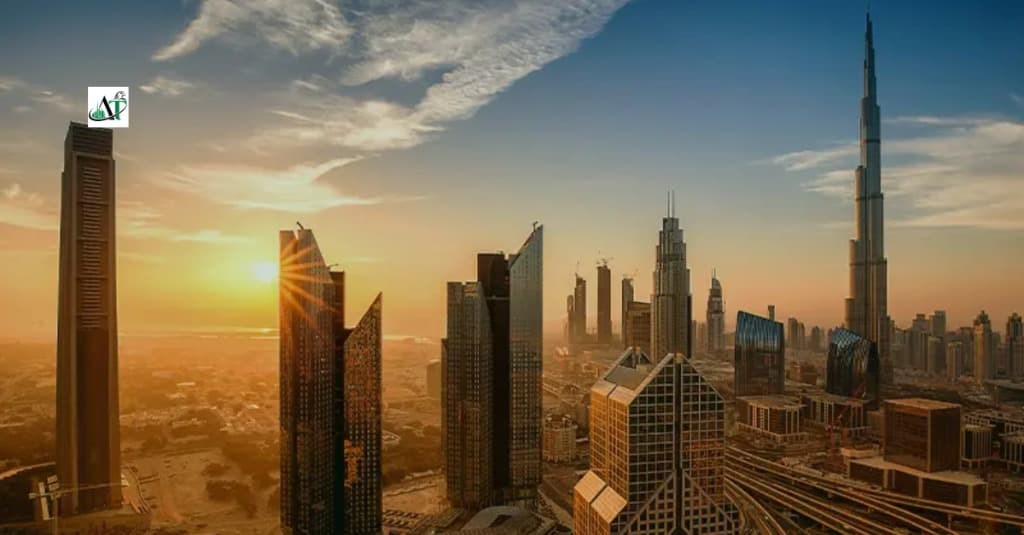
“The UAE's combined real estate sector delivered AED 252 billion in total transaction value in Q1 2026 alone — up 31 percent year on year.”
The UAE's combined real estate sector delivered AED 252 billion in total transaction value in Q1 2026 alone — up 31 percent year on year. To put that in human terms: that is more than USD 68 billion in a single quarter, in a country of approximately 10 million people, in a property market that a generation ago was primarily a commodity export economy's side project.
Dubai recorded 718,160 total real estate transactions in Q1 2026, including 60,303 property disposals — a 6 percent increase from the same period last year. Residential sales reached AED 176.7 billion across 48,000 deals. Transaction value growth of 23.4 percent significantly outpaced volume growth of 5.5 percent — reinforcing the pattern that has defined the market through 2024 and 2025: this is not a market being driven higher by a flood of small buyers. It is being pulled upward by buyers spending more per transaction.
The luxury segment, defined as transactions above AED 20 million, is where the global headlines originate. In Q1 2026 alone, nearly 590 luxury transactions were recorded. The most expensive single sale — AED 422 million for a unit in Aman Residences Tower 2 — represents the apex of a market where ultra-high-net-worth buyers have decided, in meaningful numbers, that Dubai real estate is worth holding at the same portfolio tier as London, New York, or Monaco prime residential.
The rental market remains robust alongside sales activity. Over 139,000 rental transactions were recorded in Q1, reflecting continued population inflow and a tenant market that is growing in parallel with ownership demand.
Abu Dhabi tends to attract less breathless international coverage than Dubai, partly by design and partly by temperament. The capital of the UAE has a more institutional, less promotional property market. Which makes its Q1 2026 record all the more significant: residential sales in the emirate hit USD 10.4 billion in the first quarter alone — the highest single quarter on record.
Sharjah and Ajman also posted strong Q1 growth, pointing to a UAE-wide dynamic rather than a single-emirate story. Investors who were priced out of Dubai's core districts over the last three years have moved into surrounding markets, creating demand that the broader emirate cluster is absorbing.
The buyer profile for Dubai's current market is more diverse, and more structurally grounded, than any previous cycle in the city's history.
British buyers have been particularly active, with the UAE welcoming roughly 9,800 millionaires in recent net migration data. European buyers — particularly from France, Germany, and Italy — are drawn by Dubai's tax efficiency, quality of life, and the AED's dollar peg, which eliminates currency risk for USD-income earners.
Family offices from South and Southeast Asia represent a significant and growing share of the ultra-luxury market. These buyers are not speculating on short-term price appreciation. They are moving asset holdings from less stable jurisdictions into a market that offers transparent title, functioning dispute resolution, and a sovereign guarantee of infrastructure quality.
Russian and CIS buyers, who arrived in significant numbers following 2022, continue to be active, though their share of overall volume is declining relative to the market's growth as other buyer groups scale up.
And then there is a buyer profile that rarely appears in investor guides: long-term UAE residents, now armed with Golden Visas and the psychological security they provide, who have decided to convert from renters to owners in the city where they already live and work. This group is not speculative at all. They are making a home purchase. And they are doing it in a city where, for the first time in many of their adult lives, they feel legally secure enough to do so.
Dubai's pipeline looks heavy on paper. Over 300 residential projects were unveiled in 2025. But actual delivery is running 30 to 40 percent below projections in most market analyses, due to construction logistics, material costs, and developers' deliberate pacing of handovers to manage price pressure.
In the ultra-luxury segment, supply is genuinely scarce. Only a handful of developers — Emaar, Aldar, Nakheel, and a small number of boutique luxury operators — have the credibility, the land bank, and the delivery capability to produce product at the AED 20 million-plus tier. Demand for that product continues to outpace supply.
The segment most worth watching for value investors is the metro-adjacent mid-market. Areas served by the future Blue Line — Dubai Creek Harbour, Festival City, parts of Dubai Silicon Oasis — have infrastructure appreciation dynamics baked in. Transport access in Dubai, as in every major city, has historically preceded property value growth by two to four years. The Blue Line opens those areas.
Dubai has committed to a Real Estate Sector Strategy 2033 that targets AED 1 trillion in annual transactions. In 2025, the market recorded AED 917 billion. It is within striking distance. Reaching that target requires sustained population growth (currently on track), continued economic diversification (progressing), infrastructure investment (committed), and a global investor perception that Dubai property is a legitimate store of wealth rather than an emerging market bet.
On all four dimensions, the current trajectory supports the ambition. That does not mean the path is straight. But the gap between where the market is and where the strategy targets has never been smaller.